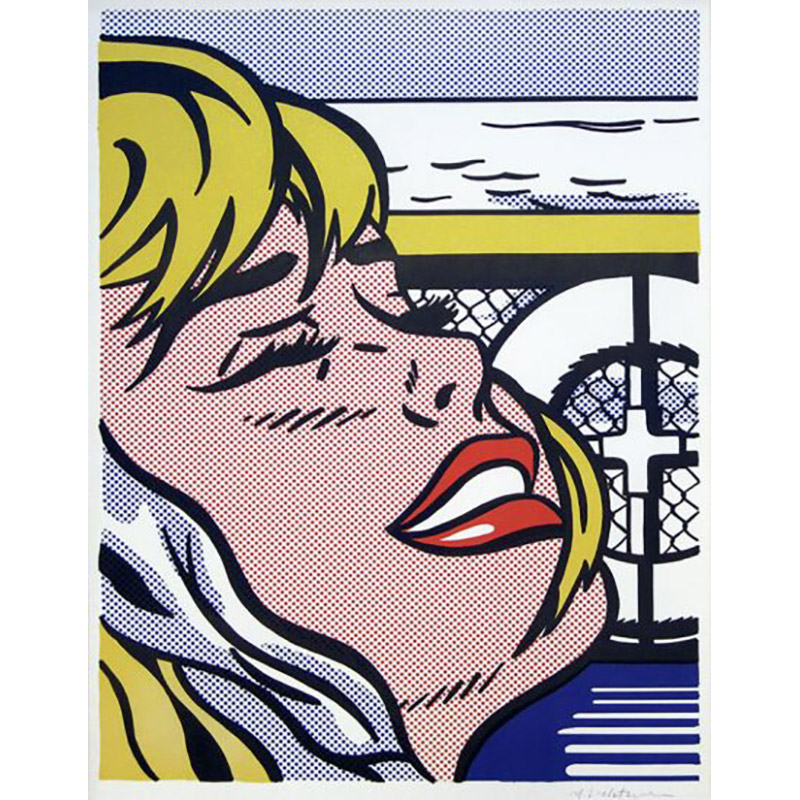

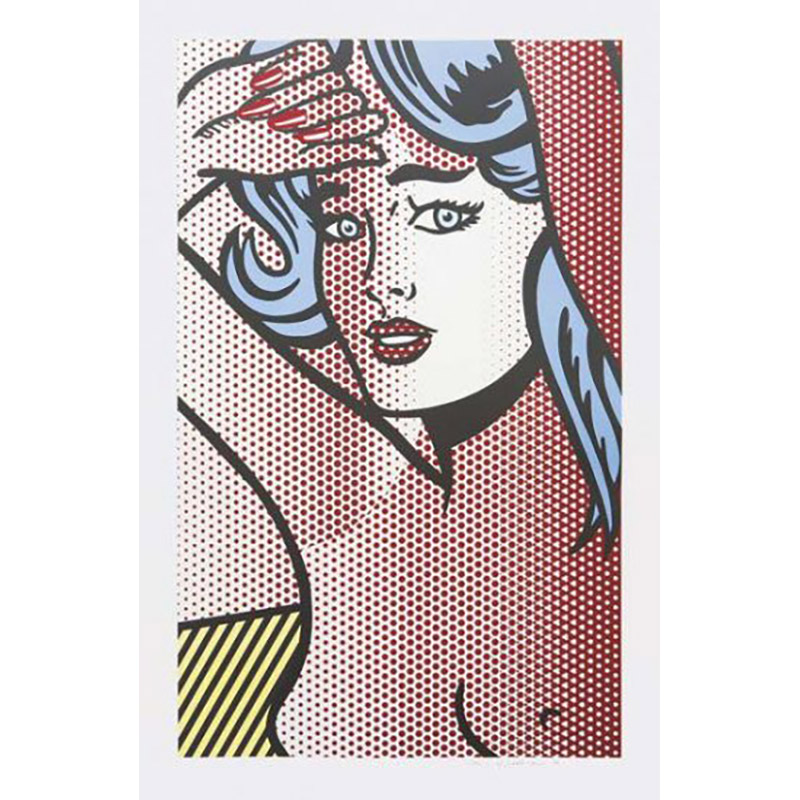
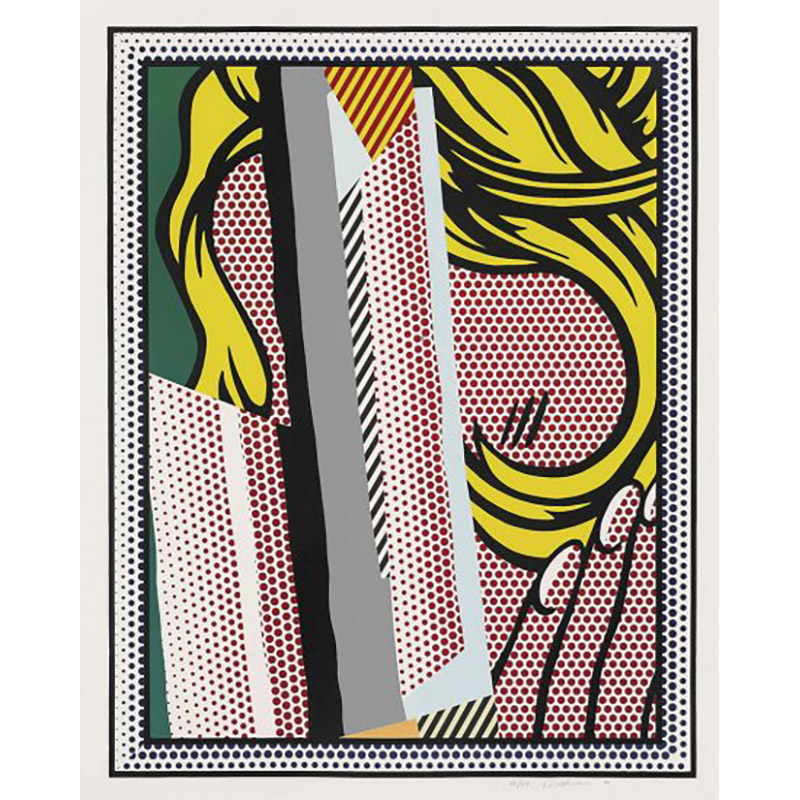
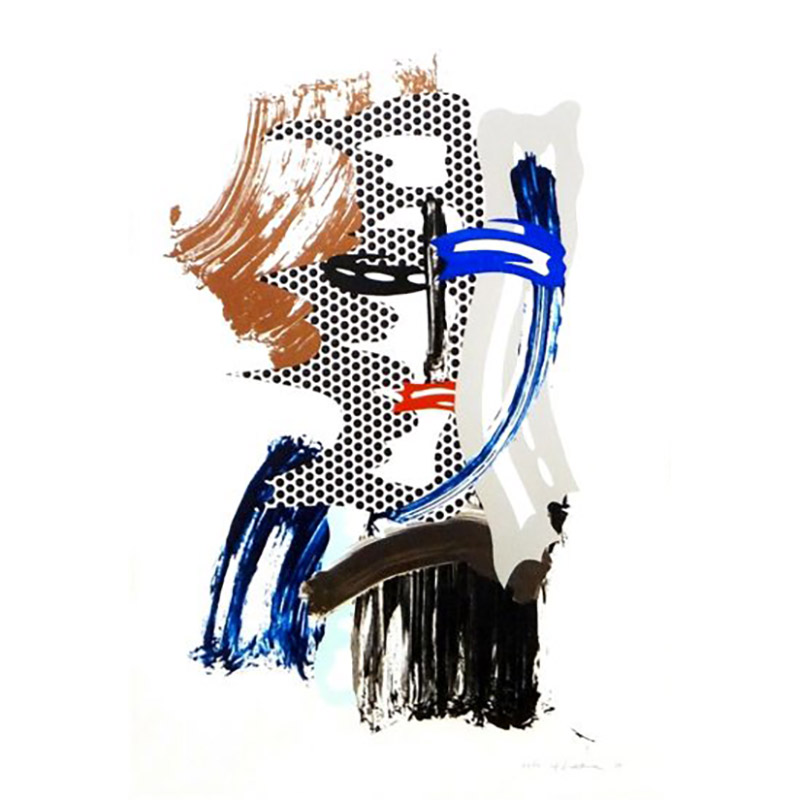
If you are trying to determine whether a Roy Lichtenstein print is original, the first step is identifying the exact documented edition—not simply checking for a signature or edition number.
Lichtenstein created screenprints, lithographs, woodcuts, etchings, relief prints and mixed-media editions. His imagery was also widely used in exhibition posters, books, announcements and later reproductions, so similar-looking works can belong to very different market categories.
An original Roy Lichtenstein print should correspond with known information about the work, including its medium, paper, dimensions, signature, edition structure, printer, publisher, catalogue reference and workshop markings.
Original Roy Lichtenstein Print vs. Reproduction
An original Roy Lichtenstein print was produced as a work of graphic art in its own right.
A reproduction, poster or photomechanical print may instead reproduce an existing image or use Lichtenstein imagery for another published purpose.
The distinction can materially affect both identification and market value.
A work should not be considered original solely because it carries Lichtenstein’s name, a signature or an edition number. The physical artwork should correspond with the documented specifications for the edition.
Check the Corlett Catalogue Raisonné
Mary Lee Corlett’s The Prints of Roy Lichtenstein: A Catalogue Raisonné 1948–1993 is one of the principal references used to identify Lichtenstein prints.
Corlett catalogue entries can document details such as:
- Title
- Date
- Medium
- Sheet and image dimensions
- Edition size
- Paper
- Printer
- Publisher
- Signature and numbering
- Proof structure
- Workshop stamps or blind stamps
The current Roy Lichtenstein Catalogue Raisonné also provides RLCR references and incorporates documentation from the Corlett catalogue.
A Corlett or RLCR reference helps identify the documented work, but the catalogue number alone does not authenticate the physical print. The artwork itself should match the recorded specifications.
Check the Signature
Many original Roy Lichtenstein prints are hand-signed in pencil, but not every documented work follows the same signature or numbering format.
Depending on the edition, a work may be:
- Signed and numbered
- Signed but unnumbered
- Marked as an Artist’s Proof
- Marked as a printer’s or publisher’s proof
- Unsigned as issued
A convincing signature is only one piece of evidence.
The signature placement, edition information, paper, dimensions and publication details should all correspond with the documented edition.
Some legitimate Castelli-issued works, for example, were signed but unnumbered, so a missing edition number is not automatically a warning sign.
Check the Edition Number and Proof Type
Edition markings can help determine exactly which version of a Lichtenstein print you own.
Look for:
- Standard numbered editions
- Artist’s Proofs
- Printer’s Proofs
- Publisher’s Proofs
- H.C. impressions
- Other documented states
It is important to distinguish an edition number from a Corlett or RLCR catalogue number.
For example, an edition marking such as 24/100 identifies an individual impression within an edition, while the catalogue number identifies the documented work itself.
Check the Paper, Dimensions and Printing Technique
Original Lichtenstein prints were produced on specific papers and within documented dimensions.
Compare:
- Sheet size
- Image size
- Paper type
- Printing technique
- Margins
- Collage or added elements
- Surface materials
The printing method should also correspond with the documented edition.
Lichtenstein used screenprint, lithography, woodcut, etching, relief printing and combinations of techniques, and some later