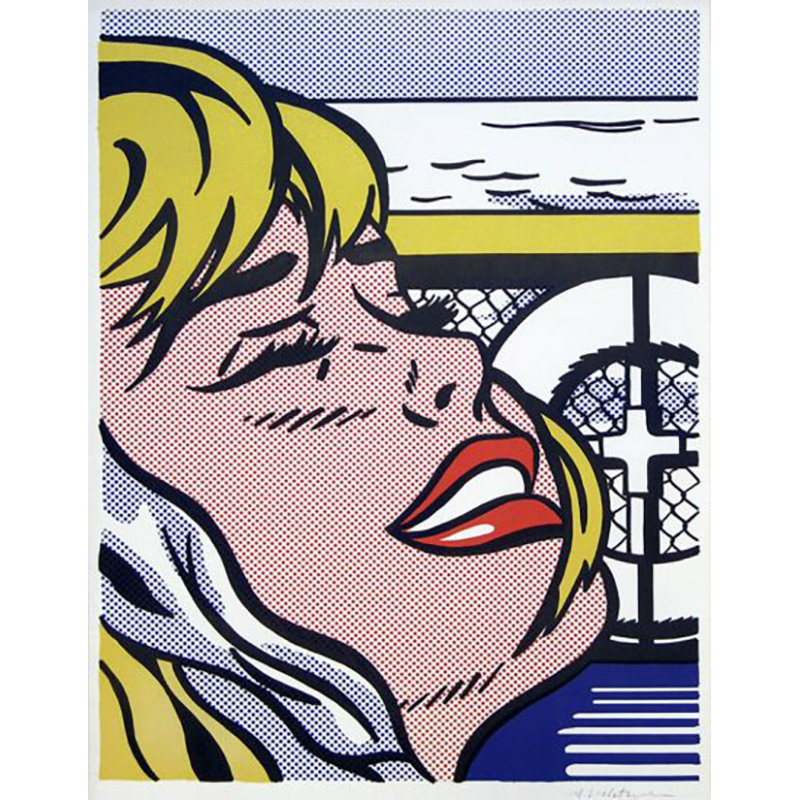
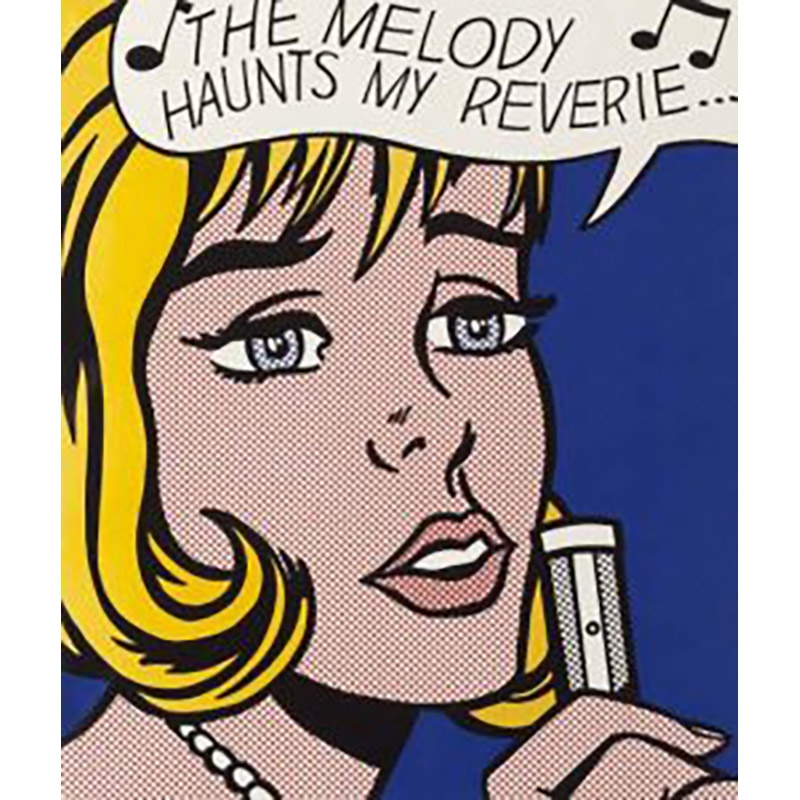
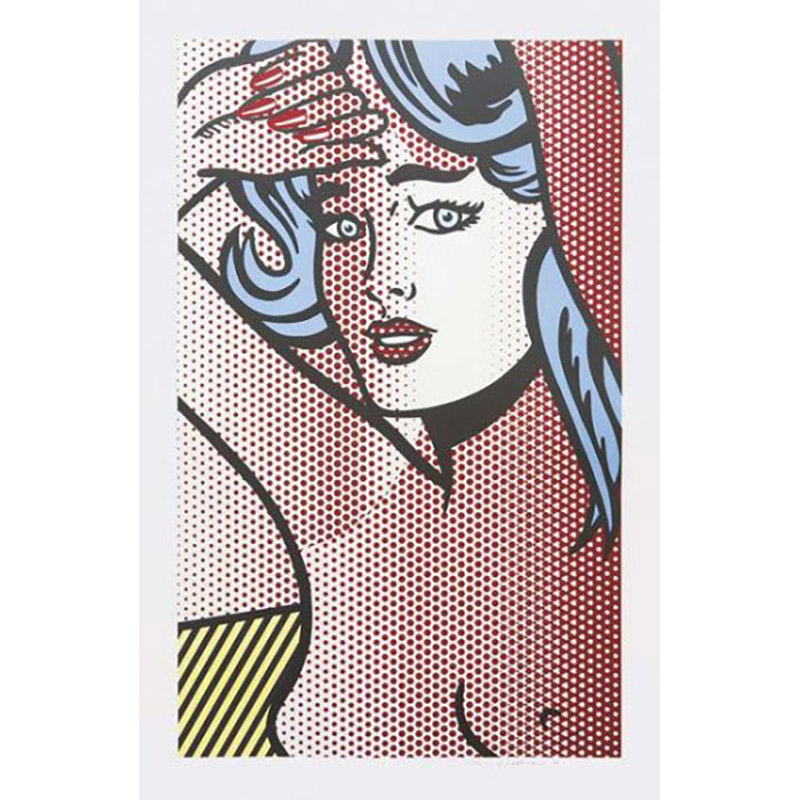
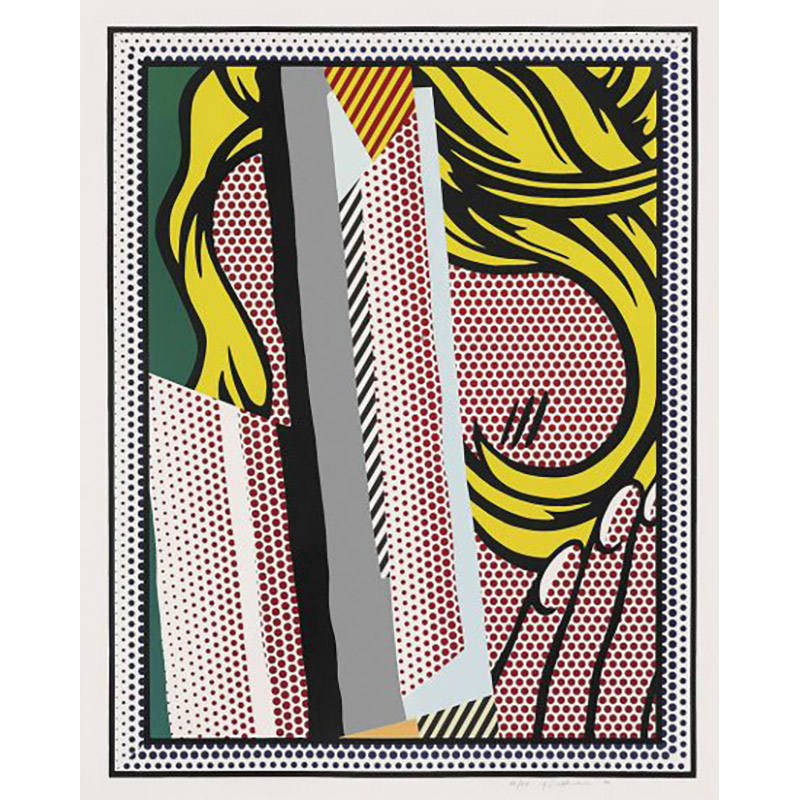
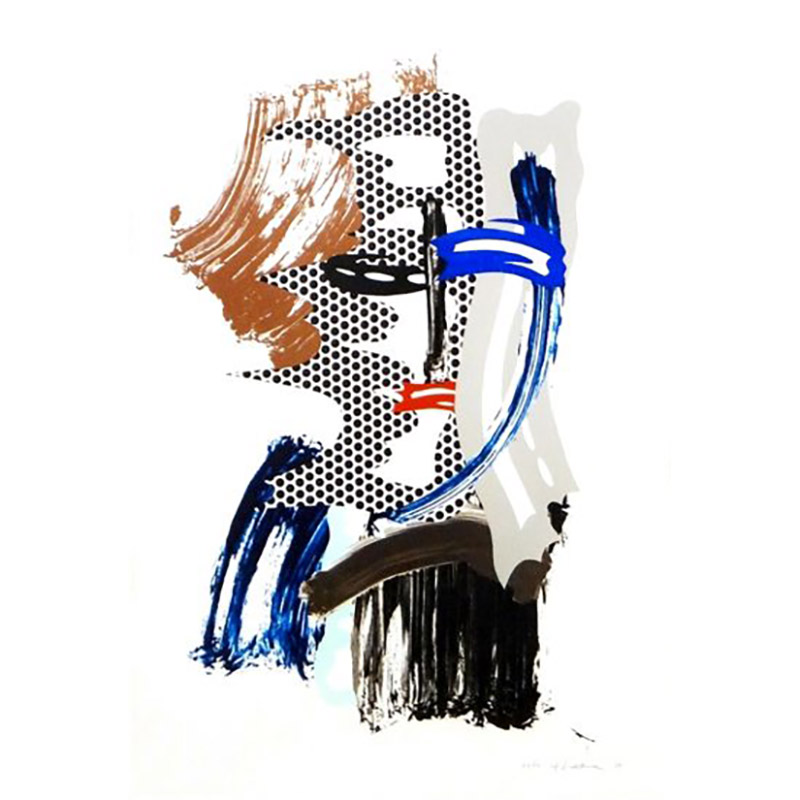
Want to Sell Roy Lichtenstein Brushstroke Screenprints? Our gallery reviews the classic early screenprints and the later Brushstroke Figures mixed-media editions for potential direct purchase. Send photographs for a confidential evaluation of the exact artwork, edition, signature, condition and ownership history.
Sell My Roy Lichtenstein Brushstrokes
Roy Lichtenstein Brushstroke and Brushstroke Figures
Lichtenstein made the brushstroke itself a subject, translating the gesture of painting into outlined shapes, dots and controlled areas of color. The motif appears across different periods and editions, so the exact title and date are essential when identifying a work.
This guide covers Brushstroke, 1965, Brushstrokes, 1967, and the complete eight-work Brushstroke Figures series of 1989. These are distinct editions with different materials, publishers and numbering.
The Early Screenprints
Brushstroke (1965, Corlett II.5) and Brushstrokes (1967, Corlett 45) were published by Leo Castelli Gallery; the 1967 edition was issued for the Pasadena Art Museum. Both designs also appeared as posters, making the edition details especially important.
Brushstroke Figures, 1989
In the later series, layered strokes suggest faces and figures. Graphicstudio combined lithography, waxtype, woodcut and screenprint, creating varied surfaces and textures. Waxtype uses pigmented wax applied through a screen.
Seven works were co-published by Waddington Graphics and Graphicstudio. The eighth, Roads Collar, was published by Graphicstudio alone and belongs to the same series, catalogued as Corlett 226–233.
Explore the Brushstroke Artworks
The first two images show the early screenprints. The remaining eight show every composition in the 1989 Brushstroke Figures series.


Brushstroke Editions and Corlett References
The early screenprints have different edition structures from the 1989 series. In Brushstroke Figures, Roads Collar has a numbered edition of 30; the other seven compositions each have an edition of 60. Each of the eight has eight artist’s proofs, alongside other designated proofs.
| Artwork | Corlett | Numbered Edition | Artist’s Proofs |
|---|---|---|---|
| Brushstroke, 1965 | II.5 | 280 | Not established |
| Brushstrokes, 1967 | 45 | 300 | Not established |
| Blue Face (1989) | 226 | 60 | 8 |
| The Mask (1989) | 227 | 60 | 8 |
| Roads Collar (1989) | 228 | 30 | 8 |
| Portrait (1989) | 229 | 60 | 8 |
| Blonde (1989) | 230 | 60 | 8 |
| Grandpa (1989) | 231 | 60 | 8 |
| Green Face (1989) | 232 | 60 | 8 |
| Nude (1989) | 233 | 60 | 8 |
The catalogue does not establish a fixed artist’s proof count for the two early screenprints. Record any proof inscription in full. A signature alone does not distinguish a numbered edition from a signed poster.
Paper, Dimensions and Production
The 1965 and 1967 screenprints are on wove paper. Graphicstudio produced the 1989 editions on cold-pressed Saunders Waterford paper, combining lithography, woodcut, screenprint and waxtype. Dimensions vary, and some sheets have irregular outlines. Record the full sheet measurements separately from the frame or visible image opening.
Signatures and Graphicstudio Markings
The early numbered editions are pencil-signed and numbered in the lower-right margin. The 1989 Brushstroke Figures works are signed, numbered and dated ’89 in pencil, with the Graphicstudio blindstamp. Reverse markings include a copyright stamp and workshop number.
Compare the complete composition, paper, measurements and inscriptions with the appropriate catalogue entry. The surface texture of waxtype and the mixed printing techniques are useful details to photograph.
See our guide to identifying original Roy Lichtenstein artwork.
Photographs to Send
- The complete front, including visible margins and sheet edges.
- Close-ups of the signature, numbering, any date and workshop blindstamp.
- An angled view showing the surface texture.
- Accessible reverse markings and labels, plus any fading, creases, tears or surface damage.
- Dimensions and available invoices, certificates or ownership records.
Phone photographs are sufficient for an initial inquiry. If the work is framed, send what you can photograph safely without removing it.
For general valuation guidance, visit How Much Is My Roy Lichtenstein Worth? A proof designation does not automatically establish a higher value.
How to Sell Your Roy Lichtenstein Brushstrokes
1. Send Photographs
Share images and the information you have. Complete documentation is helpful but is not required to begin.
2. Receive Our Review
We research the artwork and discuss a potential direct purchase offer if it is appropriate for our inventory.
3. Arrange the Sale
If you accept an offer, we coordinate payment and the agreed arrangements for packing and collection.
Learn more about selling your Roy Lichtenstein artwork.
Frequently Asked Questions
Are Brushstroke and Brushstroke Figures the same series?
No. The early 1965 and 1967 screenprints are separate from the eight-work Brushstroke Figures series of 1989. Each group requires its own edition and material comparisons.
Why are only seven Brushstroke Figures sometimes shown together?
Seven were co-published by Waddington Graphics and Graphicstudio. Roads Collar was published by Graphicstudio alone; the catalogue includes it as the eighth work in the series.
Are the 1989 works entirely screenprinted?
They combine screenprint with lithography, woodcut and waxtype. The full medium description helps distinguish these editions from reproductions of the imagery.
Can I sell one work or a different Brushstroke edition?
Yes. Send photographs even if your title is not pictured here. We can begin identifying the exact work and consider suitable individual works, groups and documented proofs for purchase.
Considering Selling Your Lichtenstein Brushstrokes?
Send photographs for a confidential evaluation and potential direct purchase offer. We can begin with the information you already have.